
In 2026, DFW homeowners are still choosing wood for the same reason they always have: it looks right in a Texas neighborhood. What’s changed is how people are styling it. Instead of a “just put up a privacy fence” mindset, more folks are treating the fence like part of the home’s exterior design—matching lines, colors, and trim to the house and backyard setup.
I’m Mark with MC Fence DFW, and these are the wood fence styles I’m building the most right now around Dallas–Fort Worth, and why each one works.
Classic Stockade Privacy (The Timeless Option)
A clean 6-foot stockade with dog-ear pickets — the look most people picture when they think “privacy fence.”
Stockade is the vertical picket look most people picture first. Around DFW, you’ll commonly see it at about 6 feet tall with dog-ear or flat-top pickets. It’s the bread and butter of fence building out here, and honestly, there’s a reason it’s never gone away.
Why people still love it
- Straightforward privacy without extra design complexity
- Fits almost any home style, from older brick ranch houses to newer builds
- Budget-friendly compared to more “built-up” styles
Where I see it the most
Stockade is still everywhere, but it’s especially common in neighborhoods where HOAs prefer traditional vertical fencing and consistency from yard to yard. If your HOA has opinions about your fence—and around here, they usually do—a stockade is almost always a safe bet.
Board-on-Board Privacy (The “No Gaps” Upgrade)
Board-on-board overlaps each picket, so there are zero gaps, and best of all it looks custom without getting flashy or expensive.
Board-on-board takes vertical pickets and overlaps them, so you don’t get the shifting gaps you can see with standard side-by-side fences. This is probably the style I get asked about the most, and I get it—people want real privacy, not “mostly private except when you’re standing at the right angle.”
Why it’s popular
- Better privacy from every angle (great for corner lots)
- More solid look—it reads “custom” without getting flashy
- Handles movement better when boards expand and contract through the Texas weather
Where it’s trending
I’m seeing board-on-board requested a lot in family neighborhoods that want privacy-first yards. Mansfield is a good example—cedar board-on-board builds are really common out there for privacy and durability. And if you’re in Cedar Hill, it’s also a frequent pick for stained, privacy-forward installs.
Horizontal Plank Fencing (Modern & Very “2026”)
Horizontal planks with a dark stain and clean hardware — this is the look that’s everywhere right now.
Horizontal fences have been climbing for a few years, and 2026 is the year they feel fully mainstream in DFW. I’m building more of these than ever. If you’ve driven through any recently updated neighborhood around here, you’ve seen them—and there’s a reason they keep popping up.
Why homeowners choose it
- Modern curb appeal—especially sharp behind contemporary homes and remodels
- Makes small yards feel wider because the lines pull your eye sideways
- Pairs really well with dark stains and black hardware (hinges, latches, post caps)
Where it’s showing up
Horizontal is especially common in areas with lots of updated exteriors and newer builds—think parts of North Dallas and pockets around the Metroplex where homeowners are redoing patios and outdoor living spaces. If somebody’s doing a full backyard remodel, nine times out of ten, they’re asking about horizontal.
Shadowbox Fencing (Airflow + Good Looks)
Shadowbox alternates pickets on each side — looks finished from both sides and lets air pass through.
Shadowbox fences alternate pickets on each side of the rails. From the street, it looks finished on both sides, and it lets air pass through way better than a solid wall of wood. I always tell people: if you want privacy but also want your yard to breathe, this is the move.
Why it works in DFW
- Helps with wind during storm season because it’s not a complete sail
- Friendlier “good neighbor” style—both sides look intentional
- A little more breathable for yards with pets and heavy sun exposure
Best use case
If you want a fence that feels private enough without looking like a solid barrier, a shadowbox is a strong middle ground. I’ve had plenty of customers pick this one because they want the privacy, but their neighbor also gets a nice-looking side of the fence. Everybody wins.
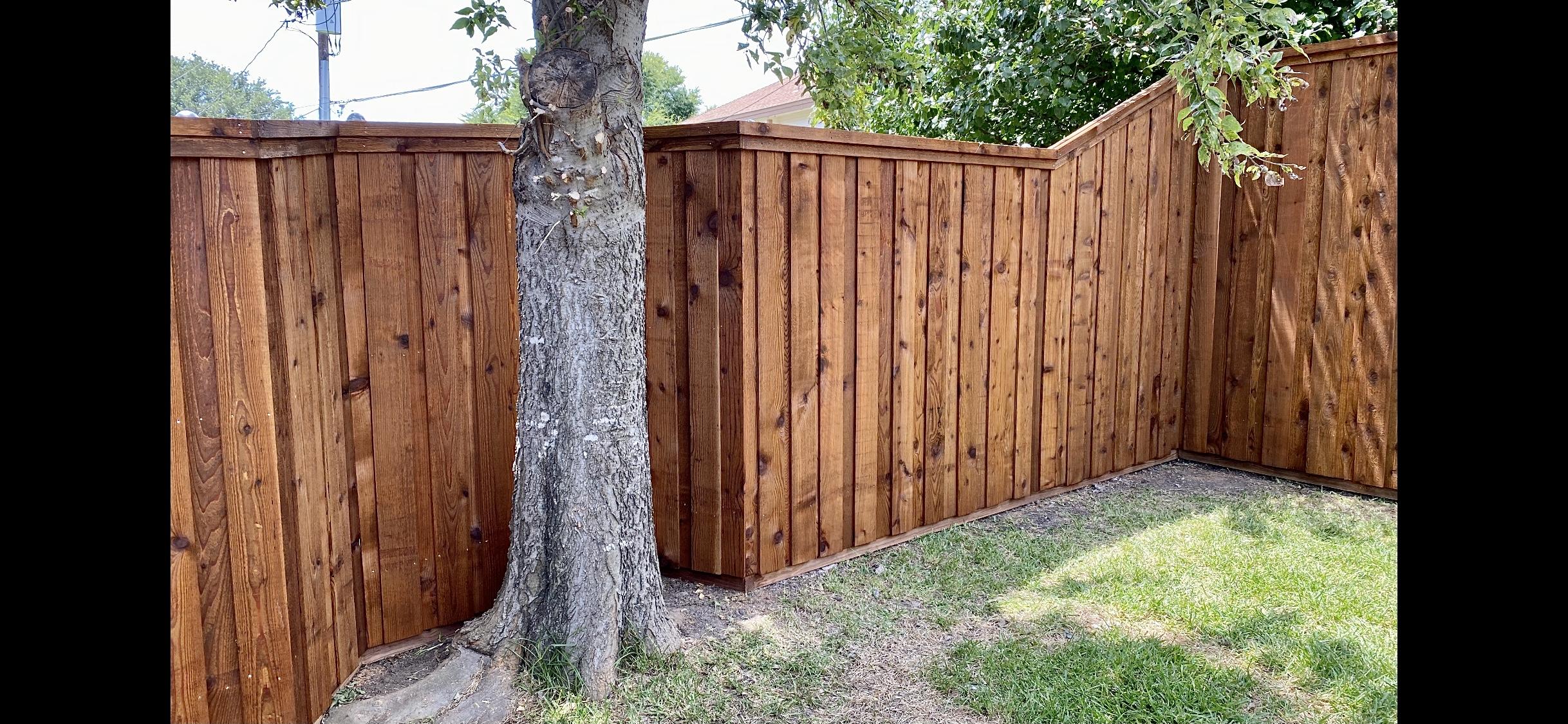
Cap and Trim
Cap and trim adds a finished top rail and trim boards — same privacy fence, but it looks like a million bucks.
This is where 2026 wood fencing gets really “designer” without doing anything weird. You take your privacy fence and add a top cap and finished trim boards to create a clean, framed look. It’s the same fence, just dressed up—and the difference is night and day.
Why people pay extra for it
- Sharper finish at the top line (it looks built, not just installed)
- Higher-end curb appeal for front-facing sections or corner lots
- Great with stain because the trim details really pop
This style shows up constantly in “we want it to look nice from the street” requests. If someone’s already investing in backyard upgrades—new patio, new landscaping, the whole deal—cap and trim is usually what ties it all together.
Decorative Tops (Lattice, Scallop & Custom Accents)
A lattice topper softens a tall fence and adds some character — popular for street-facing sections.
Not every yard needs fortress-level privacy. Decorative tops are popular for homeowners who want that wood warmth but also want the fence to feel a little lighter and more open.
Common decorative approaches
- Lattice topper: Classic, cottage-friendly, and works great to soften a tall fence
- Scalloped picket lines: More traditional and playful, good for front-side sections
- Picture-frame sections: Subtle trim that adds structure without being loud
Where these styles shine
I get these requests a lot: the neighborhood vibe is a little more “styled,” or the fence is highly visible from the street, and the homeowner wants it to complement their landscaping. It’s one of those things where a small design choice makes the whole property feel more intentional.
Why Cedar Is Still the Go-To in Texas
If you ask any DFW fence crew what wood they install the most for privacy fences, cedar is almost always part of the conversation—and for good reason. Cedar is known for natural decay resistance, insect resistance, and better dimensional stability than a lot of cheaper lumber options. That matters when you’re dealing with Texas heat swings.
Now, that doesn’t mean cedar is “set it and forget it.” But it does mean you’re starting with a wood that’s naturally better suited to this climate. It’s what I recommend to pretty much everybody, and it’s what I put around my own yard.
Quick “Which Style Should I Pick?” Guide
If your main goal is privacy:
- Board-on-board or a clean stockade privacy fence.
If you want the most modern look:
- Horizontal planks — especially with a darker stain and clean hardware.
If you want a fence that looks more custom from the street:
- Cap and trim, or a privacy fence with a subtle decorative top.
If you want something neighbor-friendly and breezier:
- Shadowbox.
One Last Local Tip Before You Choose
DFW neighborhoods (and HOAs) can be picky about height, top style, and stain color. If you’re in places like Mansfield, Cedar Hill, Arlington, or nearby communities where consistency matters, it’s worth choosing a style that matches the neighborhood’s look and provides the function you want—privacy, airflow, or curb appeal.
If you’re not sure what’s allowed or what would look best, that’s literally what I’m here for. I’ve built fences all over the Metroplex and I’m happy to walk through your options with you—no pressure, just straight talk about what makes sense for your yard.